
Focus & Insights

What Is a Health and Safety Gap Assessment?
A gap assessment is a structured review that compares your current workplace safety program with a defined requirement, standard or goal.
It helps answer a simple question: What is missing between where we are now and where we need to be?
For safety leaders, operations managers, HR teams and supervisors, that question can uncover problems that are easy to miss during day-to-day work. A policy may exist but no longer reflect the task. Training may have been completed but not properly documented. One location may follow a corporate process while another applies it differently.
A gap assessment brings those differences into view so your organization can address them before they contribute to an incident, failed certification audit, regulatory concern, or client issue.
What Does a Gap Assessment Review?
The scope depends on what your organization is trying to achieve. A broad assessment may examine your overall health and safety management system. A targeted assessment may focus on one program, one location or one specific requirement.
- Health and safety policies
- Roles and responsibilities
- Hazard assessments
- Safe work procedures
- Training and competency records
- Workplace inspections
- Incident investigations
- Emergency response plans
- Contractor management
- Corrective action tracking
- Legal and regulatory requirements
- COR or ISO 45001 criteria
The purpose is not simply to count missing documents. The assessor also looks at whether your written programs are understood, used, and supported in the workplace.
For example, a procedure may require supervisors to complete regular inspections. The assessment should determine whether those inspections happen, whether findings are recorded, and whether corrective actions are closed.
When Is a Gap Assessment Useful?
Organizations often complete a gap assessment before a planned change or important review.
- Preparing for COR or ISO 45001 certification
- Updating an older safety management system
- Opening or acquiring a facility
- Expanding into a new jurisdiction
- Responding to a regulatory order
- Preparing for a client audit
- Introducing new equipment or work processes
- Standardizing practices across multiple sites
- Reviewing controls after a serious incident
- Addressing repeat audit findings
A gap assessment can also be useful when leadership suspects the safety program is not working consistently but does not yet know why.
The issue may not be one major failure. It may be several smaller weaknesses that have developed over time.
How Is a Gap Assessment Different From a Safety Audit?
The terms are closely related and are sometimes used together, but their emphasis can be different.
A safety audit usually evaluates how effectively a workplace safety system is operating. It may look at legal compliance, field practices, documentation, and overall performance.
A gap assessment usually compares the current system with a clearly defined future state or set of criteria.
- A compliance audit may evaluate whether current practices align with applicable requirements.
- A certification gap assessment may identify what must change before a COR or ISO 45001 audit.
- A targeted gap review may compare a machine safety program with corporate or regulatory expectations.
In practical terms, both processes gather evidence, identify weaknesses, and support corrective action. The main difference is the question being asked.
An audit often asks, “How well is the system working?”
A gap assessment asks, “What do we still need to put in place?”
How Does the Process Work?
A practical assessment usually follows four stages.
1. Define the desired standard
The first step is to confirm what your organization is being assessed against.
- Occupational health and safety legislation
- Industry regulations
- Corporate standards
- Client requirements
- Certification criteria
- Internal policies
- Previous audit commitments
Without clear criteria, it is difficult to decide whether something is a true gap or simply a different way of working.
2. Gather evidence
The assessor reviews how the system is designed and how it operates.
- Documents and records
- Interviews with leaders, supervisors and workers
- Workplace observations
- Previous audit findings
- Incident and inspection data
- Training and maintenance records
The strongest conclusions are usually supported by more than one source.
A training certificate may show that a course was completed. An interview can show whether the worker understands the requirements. Field observation can show whether that knowledge is being applied.
3. Identify and rate the gaps
Not every finding creates the same level of risk.
A missing signature is different from an uncontrolled high-risk task. An outdated form is different from a program that repeatedly identifies hazards but does not correct them.
- Potential severity
- Likelihood of harm
- Number of people exposed
- Frequency of exposure
- Legal significance
- Whether the issue is isolated or widespread
- Whether the same problem has occurred before
This helps leadership focus first on the gaps that create the greatest exposure.
4. Build a corrective action plan
The final report should do more than describe what is wrong.
- What needs to change
- Who is responsible
- When it should be completed
- Whether interim controls are needed
- What evidence will confirm completion
- Who will verify that the action worked
A vague action such as “review the procedure” leaves too much room for delay.
A stronger action names the owner, the required change, the approval process and the expected completion date.
What Can a Gap Assessment Reveal?
Some findings are obvious, such as missing training records or an outdated policy. Others are more subtle.
- Procedures no longer match current equipment
- Supervisors interpret the same requirement differently
- Workers use unofficial workarounds
- Corrective actions remain open without clear ownership
- Training is completed but competency is not verified
- Contractor responsibilities are poorly defined
- Corporate requirements are applied inconsistently across sites
- Safety controls weaken when production pressure increases
These findings matter because a safety system can appear complete on paper while performing very differently in practice.
A useful gap assessment looks beyond the existence of documents and tests whether the system works under real operating conditions.
How Should You Prepare?
Preparation should make the process efficient, not make the workplace look temporarily perfect.
Start by clarifying the purpose and scope. Identify which locations, departments, shifts, contractors and activities will be included.
- Policies and procedures
- Hazard assessments
- Training matrices
- Inspection reports
- Incident investigations
- Emergency plans
- Previous audits
- Corrective action logs
- Contractor files
- Performance data
Employees should know why the assessment is happening and that they may be interviewed. They should be encouraged to answer honestly rather than coached on what to say.
A worker who cannot explain a procedure may reveal an important communication or training gap. That information is more useful than a rehearsed answer.
What Happens After the Assessment?
The value of a gap assessment depends on what happens next.
Leadership should review the findings, control urgent hazards and approve a prioritized action plan.
- Completed
- Supported by evidence
- Verified for effectiveness
Completion and effectiveness are not the same.
Updating a procedure completes an action. Confirming that supervisors and workers understand and use the new procedure verifies that the change worked.
Without this follow-through, the assessment becomes a record of known issues rather than a tool for improvement.
Quick FAQ
A gap assessment compares your current safety program with a defined requirement, standard or goal. This may include legislation, corporate policies, client requirements, COR or ISO 45001 criteria, or previous audit commitments. The goal is to identify what is missing between your current position and the standard you need to meet.
A gap assessment is useful before certification, a client audit, expansion into a new jurisdiction, the introduction of new equipment or processes, or the acquisition of a facility. It can also help after a serious incident, regulatory order or repeat audit finding, or when safety practices vary across locations.
An action should not be closed simply because a document was updated or a task was completed. The organization should collect evidence and verify effectiveness. For example, after revising a procedure, confirm that supervisors and workers understand it, use it correctly and follow the new requirements in practice.
Take Action
A gap assessment can give you a clearer view of where your safety program stands, which weaknesses create the greatest risk and what your organization should address next.
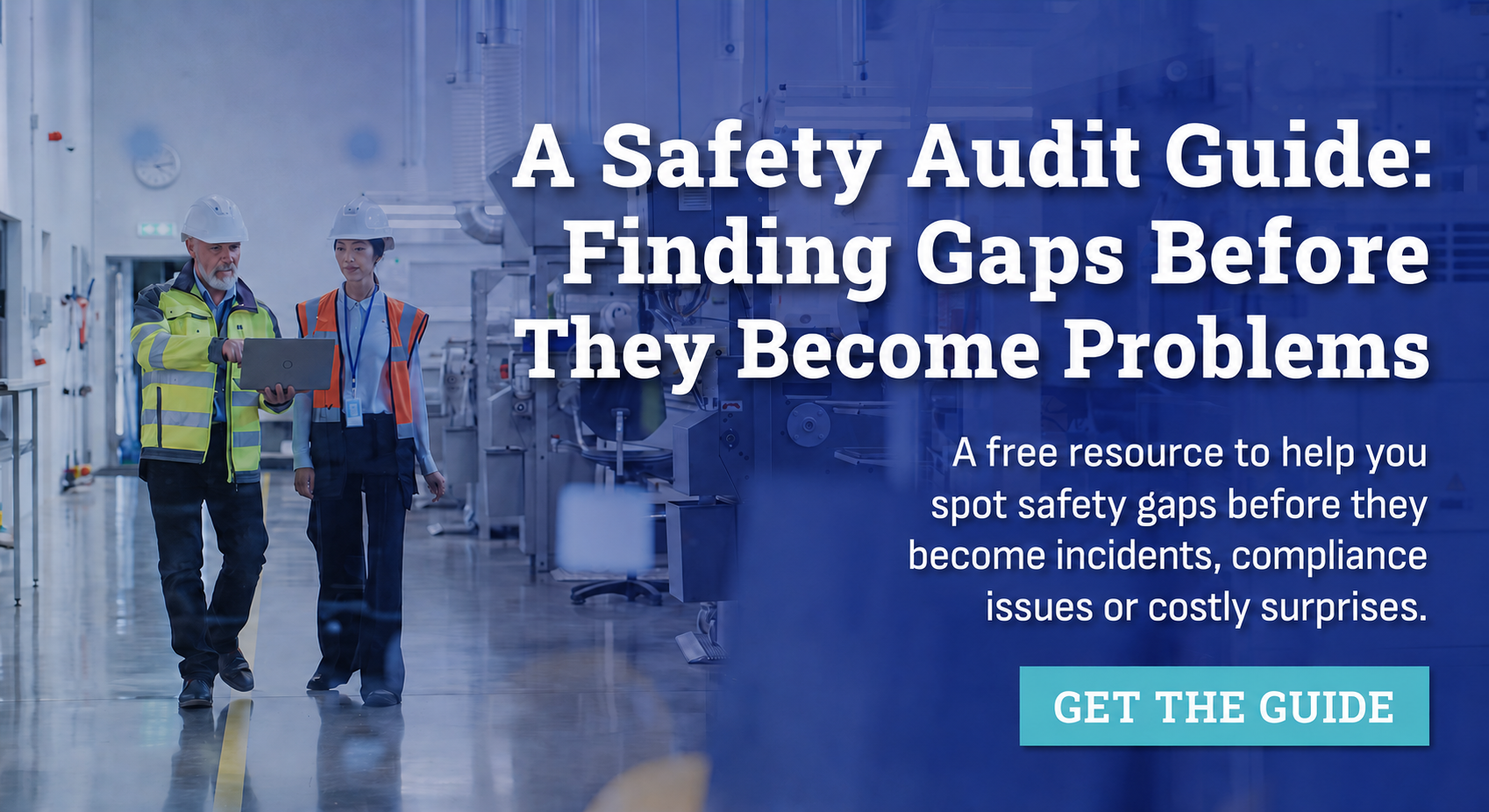
Learn more about safety audits and gap assessments by reading our free resource: A Safety Audit Guide: Finding Gaps Before They Become Problems
Learn more about our Safety Audits and Gap Assessments and how an objective review can help you compare written requirements with workplace practices, prioritize findings and build a practical corrective action plan.
Latest News & Insights
Deeper Dives
Uncategorized
Occupational Hygiene: A Practical Guide to Identifying and Controlling Workplace Health Hazards
Focus & Insights
Workplace Noise Assessment and When You Need One
Focus & Insights
Silica Exposure and How to Control the Risk