
Focus & Insights
Ergonomic Hazards Construction Teams Should Watch For
Ergonomic hazards on construction sites are often built into the work before anyone picks up a tool. Materials are staged too far away. Access is awkward. Work happens overhead, below knee height, or in tight spaces. Then everyone wonders why backs, shoulders, knees, and wrists are complaining like they’ve joined a union.
Ergonomic hazards are job conditions that place unnecessary strain on the body. In construction, they can contribute to musculoskeletal disorders, or MSDs, which affect muscles, tendons, joints, nerves, and other soft tissues.
Why Construction Ergonomic Hazards Are Hard to Control
Construction ergonomic hazards are shaped by movement, variation, and changing site conditions. Unlike a fixed manufacturing workstation, construction work shifts by phase, trade, weather, location, schedule, and site layout.
That makes ergonomic risk harder to spot. A task may seem short-term, but if workers repeat it across floors, zones, or project stages, exposure adds up quickly. Carrying materials across uneven ground, kneeling for long periods, climbing with tools, or working overhead can become routine parts of the job, even when the strain is unsustainable.
Common warning signs include:
- Frequent back, shoulder, wrist, or knee discomfort
- Workers avoiding certain tasks where possible
- Informal shortcuts to reduce carrying distance
- Modified-duty plans that do not match site realities
- Repeated soft-tissue strains across similar work
Common Ergonomic Hazards in Construction Work
Construction work often combines several risk factors at once. A worker may lift, carry, twist, climb, grip, kneel, and work overhead in the same task. That combination matters because the body is not a forklift with opinions.
The most common ergonomic hazards in construction include:
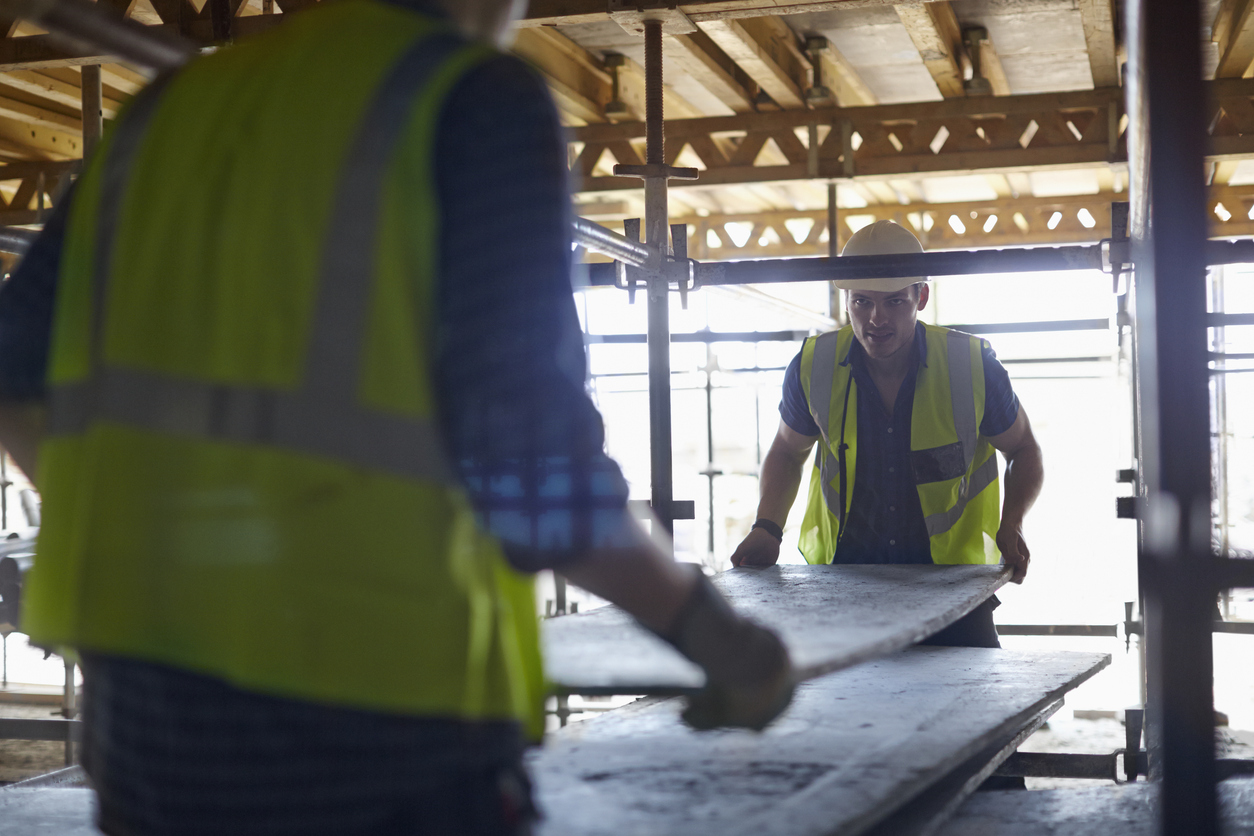
- Manual material handling: lifting, carrying, lowering, pushing, or pulling heavy or awkward materials
- Awkward postures: bending, twisting, kneeling, squatting, or working with arms overhead
- Poor access: reaching around obstacles, working in confined areas, or using temporary work surfaces
- Repetition: repeating the same motion during installation, fastening, finishing, or handling tasks
- Forceful exertion: gripping tools, moving equipment, cutting materials, or positioning heavy components
- Vibration: using powered hand tools, compactors, grinders, or other vibrating equipment
- Long carry distances: moving materials from storage areas to the point of installation
Manual material handling means physically moving or supporting loads by hand or body effort. In construction, this can include drywall, pipe, lumber, block, tools, equipment, and packaged materials.
How to Reduce Ergonomic Risk on Construction Sites
Reducing ergonomic hazards in construction starts before the task begins. Planning, staging, access, sequencing, and equipment selection can remove a lot of strain from the job.
Key Considerations
Controls need to work under real-site conditions. A solution that looks great in a meeting but fails on uneven ground, tight timelines, or multi-trade congestion will not last long.
Practical improvements may include:
- Staging materials closer to where they will be installed
- Using carts, dollies, hoists, lifts, or other mechanical assists
- Planning delivery routes and clear access paths
- Reducing overhead work where possible
- Improving work height with platforms, tables, or adjustable supports
- Sequencing tasks to avoid repeated re-handling
- Choosing tools that reduce grip force, vibration, or awkward wrist posture
- Rotating high-strain tasks when redesign is not immediately possible
Quick FAQ
Common hazards include manual material handling, awkward posture, overhead work, kneeling, forceful tool use, vibration, poor access, long carry distances, and repetitive installation tasks.
Construction sites change constantly. Layout, weather, access, trades, materials, and sequencing can all shift, which makes ergonomic risk harder to predict and control without planning.
Employers can reduce risk by improving material staging, shortening carry distances, using mechanical assists, planning access routes, reducing overhead work, improving work heights, and selecting better tools.
Better Planning Reduces Construction Strain
Ergonomic hazards in construction should be treated as part of project planning, not just a worker discomfort issue. If you are trying to reduce strains, prevent repeat MSD claims, or make demanding work easier to sustain across crews and sites, start with the tasks that create the most exposure.
To see how that kind of support works in practice, read A Guide to Workplace Ergonomics for Construction and Industrial Workplaces. If you want to talk through your current gaps, priorities, or internal capacity, talk to an expert.
CrossSafety’s team supports organizations across North America with consulting, workplace safety solutions, and training designed for complex, high-risk environments.
Latest News & Insights
Deeper Dives
Uncategorized
Occupational Hygiene: A Practical Guide to Identifying and Controlling Workplace Health Hazards
Focus & Insights
Workplace Noise Assessment and When You Need One
Focus & Insights
Silica Exposure and How to Control the Risk