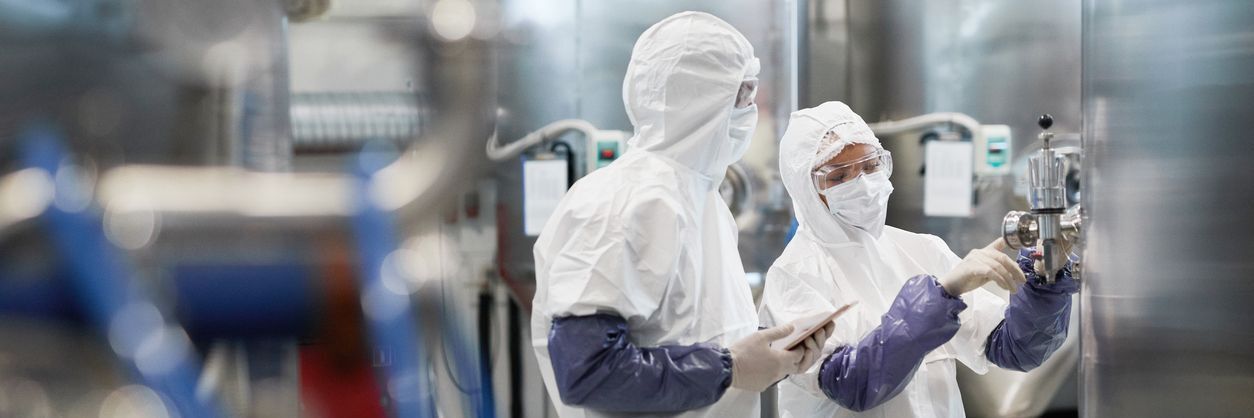
Occupational Hygiene: A Practical Guide to Identifying and Controlling Workplace Health Hazards
Table of Contents
Some workplace hazards are easy to see: an unguarded edge gets attention. So does damaged equipment, a blocked exit or a forklift moving through a crowded work area.
Health hazards can be different.
A worker can breathe dust or vapour without knowing how much is entering their breathing zone. Noise can feel like a normal part of the job even when exposure is too high. A ventilation system can be running without effectively capturing a contaminant. A chemical can be used for years before repeated exposure becomes linked to illness.
That is where occupational hygiene comes in.
It is the practice of anticipating, recognizing, evaluating and controlling workplace exposures that can affect worker health. Those exposures can include chemicals, dusts, fumes, noise, biological agents, heat, vibration and other physical stressors.
For employers, the practical question is not simply whether a hazard exists. It is whether workers are being exposed, how significant that exposure is, and whether the controls in place are doing their job.
This guide explains how to answer those questions.
01. What Is Occupational Hygiene?
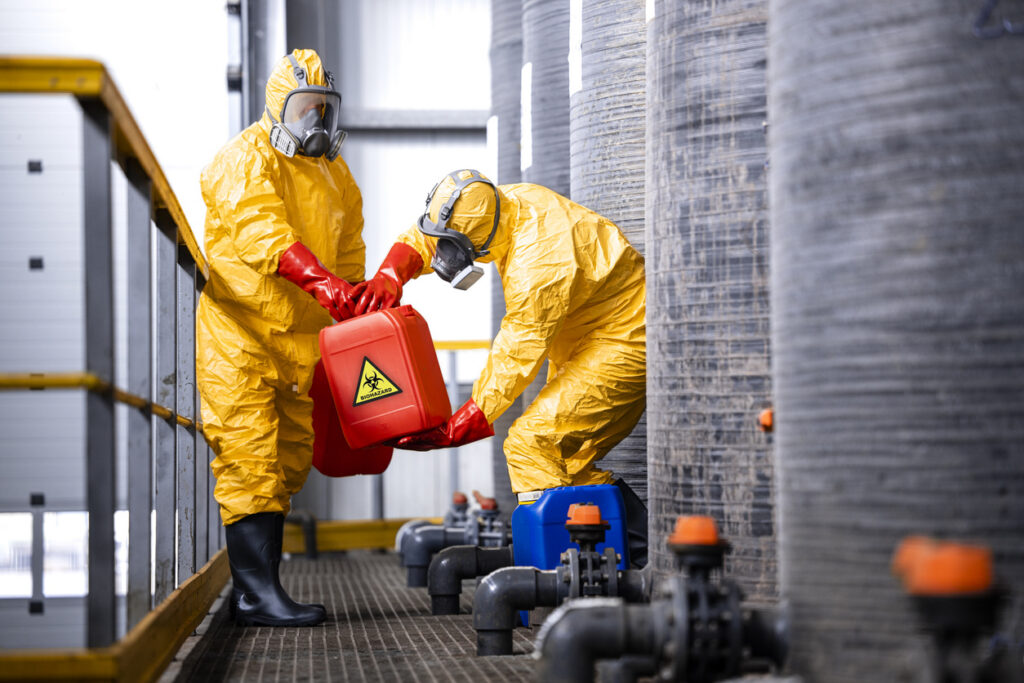
Occupational hygiene focuses on protecting workers from health hazards created by the work environment.
Unlike an injury caused by a single incident, occupational illness can develop gradually. A worker may be exposed to noise, silica, welding fumes, solvents or another substance repeatedly over months or years before the full effect becomes apparent.
The job of the hygienist is to understand that exposure before it causes harm.
A typical process follows four basic steps:
Anticipate. What hazards could be created by the materials, equipment, processes and work being planned?
Recognize. Which hazards are present, and which workers could be affected?
Evaluate. How much exposure is occurring, and how does it compare with applicable limits or other accepted criteria?
Control. What changes can reduce the exposure and protect workers?
This is why industrial hygiene work often combines technical measurements with a close look at how work is actually performed. Sampling tells you what workers are exposed to. Observation helps explain why.
The hazards involved can range from solvents and heavy metals to silica dust, welding fume, asbestos fibres, occupational noise, vibration, biological agents, heat stress and radiation.
02. Why Workplace Health Hazards Are Easy to Miss
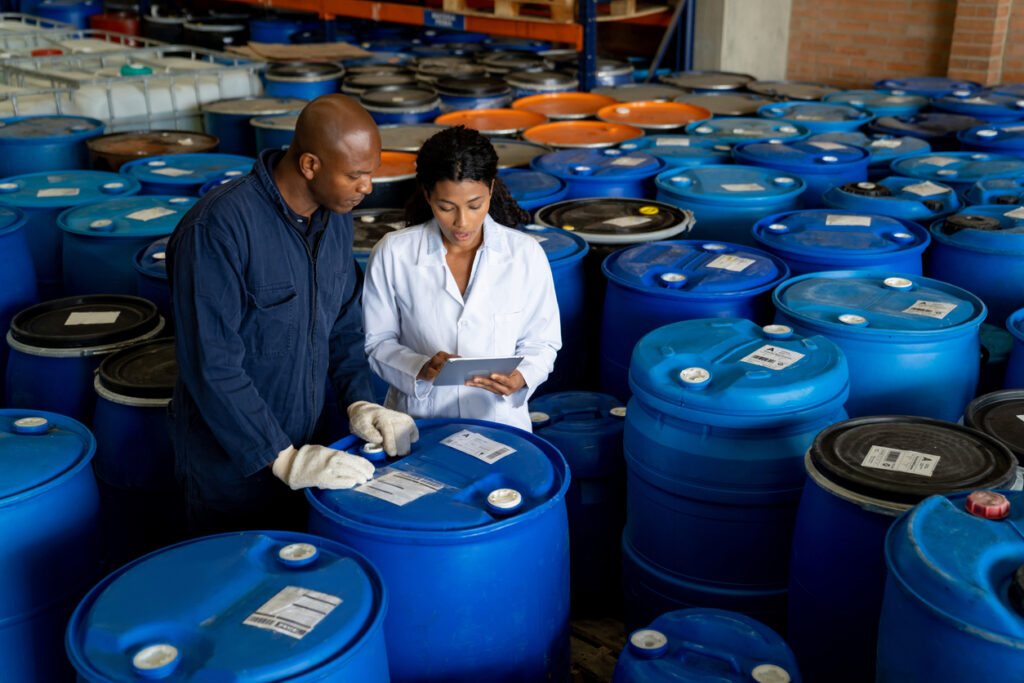
Most organizations are not ignoring health hazards intentionally.
The difficulty is that many of these hazards blend into normal operations.
A dusty task has been performed the same way for ten years. Workers have become used to the smell of a solvent. Hearing protection is available, so everyone assumes noise has been dealt with. A local exhaust system turns on when the machine starts, so it appears to be working.
Those observations are useful, but they do not tell you how much exposure is occurring.
One of the biggest gaps is assuming that the presence of a safety measure proves that the hazard is controlled.
For example, a Safety Data Sheet can tell you important things about a hazardous product. It does not tell you the concentration a particular employee is breathing during a particular process.
A respirator can provide protection when it is selected, fitted, maintained and used properly. It cannot compensate for an exposure that has never been characterized correctly.
A ventilation system can move air. That does not necessarily mean it captures the contaminant where it is generated.
CrossSafety’s current service guidance identifies several common weaknesses, including a lack of baseline exposure data, reliance on general SDS information instead of workplace measurements, respiratory programs based on incomplete hazard characterization and weak documentation of exposure monitoring.
If you have not evaluated the exposure, you can end up making safety decisions based on assumptions.
That becomes particularly important when work changes. New chemicals, equipment, production rates, work locations, contractors or processes can create a different exposure profile even when the overall job seems familiar.
03. A Practical Framework for Managing Workplace Exposure
A useful occupational hygiene program does not begin by ordering every test available.
It begins by asking better questions.
Step 1 — Understand the work
Start with what employees actually do.
Review the materials used, equipment involved, work sequence, duration, frequency and location of the task. Talk to workers and supervisors. Look at Safety Data Sheets, previous assessments, incidents, complaints and process information.
The written procedure matters, but the real job matters more.
Step 2 — Identify potential routes of exposure
Workers can be exposed in several ways.
They can inhale a contaminant. A chemical can contact or absorb through the skin. A physical agent such as noise, heat or vibration can affect the body without a chemical exposure occurring at all.
Understanding the route helps determine what needs to be evaluated.
Step 3 — Decide whether measurement is needed
Not every hazard requires the same type of testing.
Airborne contaminants can require personal or area sampling. Noise can require dosimetry or sound-level measurements. Ventilation performance can require airflow testing and examination of the system. Other hazards call for different methods.
The assessment should match the question you are trying to answer.
Step 4 — Compare findings with appropriate criteria
Results need context.
Exposure measurements are typically interpreted against applicable occupational exposure limits, regulatory requirements and recognized occupational-health guidance. CrossSafety’s service approach includes comparison with relevant provincial or state requirements and, where appropriate, sources such as ACGIH, NIOSH and OSHA criteria.
Step 5 — Control the exposure
Measurement identifies the problem. Control reduces it.
The preferred approach is to address the hazard as close to its source as practical rather than relying only on the worker to protect themselves.
Step 6 — Verify that the control worked
A change is not finished simply because it was implemented.
Where the risk warrants it, follow-up monitoring can confirm whether exposure has dropped and whether workers remain adequately protected.
That loop — understand, measure, control and verify — turns exposure management into a system rather than a one-time test.
04. When Does a Workplace Need an Exposure Assessment?
You do not have to wait for an illness, complaint or regulatory visit before evaluating workplace exposure.
In fact, one of the most useful times to conduct an assessment is before there is an obvious problem.
Consider an exposure assessment when:
- A new chemical, material or process is introduced
- Workers regularly encounter dust, fumes, vapours or aerosols
- Employees report recurring irritation, headaches, breathing problems or other symptoms that could be work-related
- Work involves substances such as silica, asbestos, lead, isocyanates or certain solvents
- Employees work in high-noise areas
- Production volumes or work methods change
- New ventilation or other engineering controls are installed
- Existing controls have not been tested to confirm their effectiveness
- A regulator, insurer or client has asked for exposure information
- An occupational illness or workers’ compensation claim raises questions about past exposure
- A new facility or operation needs baseline exposure information
Baseline monitoring can be especially valuable.
Suppose a manufacturing operation introduces a new coating process. Waiting for worker complaints before investigating leaves a large information gap. An assessment completed around startup can establish what exposure looks like under normal conditions and whether planned controls are adequate.
Construction creates another challenge because the workplace itself keeps changing.
The material being cut today may be different tomorrow. Equipment moves. Enclosures appear and disappear. Work shifts indoors or outdoors. Several trades can create exposures in the same area.
That means the need for reassessment often depends not only on the hazard, but on whether the conditions affecting exposure have changed.
05. How Workplace Exposure Is Measured
Exposure monitoring should answer a specific question.
What is the worker exposed to, at what level, and for how long?
For airborne contaminants, that can mean collecting a sample near the worker’s breathing zone while the employee performs normal work.
Personal sampling is particularly useful because it follows the worker rather than measuring only the general environment.
Area sampling serves a different purpose. It can help identify sources, characterize conditions in a location or understand how contaminants move through a work area.
Samples that require laboratory analysis should be handled using appropriate methods and chain-of-custody procedures. CrossSafety’s current service model uses accredited laboratory partners for analysis of occupational exposure samples.
Noise exposure requires a different approach.
A noise dosimeter can track a worker’s exposure throughout a shift. Area sound-level measurements can help identify noisy equipment, processes and zones within the workplace.
These two measurements answer different questions. A sound-level reading tells you something about the environment at a particular moment. Full-shift dosimetry can help establish what the worker experiences across the workday.
The same principle applies to other assessments.
The method should reflect the hazard, work pattern and decision you need to make.
A good report should leave you with more than a table of numbers. It should help explain:
- What was assessed
- Which workers or tasks were represented
- How samples or measurements were taken
- What conditions existed during testing
- How results compare with relevant criteria
- Where uncertainty or limitations exist
- Which controls should be considered
- Whether follow-up monitoring is recommended
Data is most useful when it leads to a decision.
06. Understanding Occupational Exposure Limits

A measurement by itself does not tell you whether exposure is acceptable. You need something to compare it against.
Occupational Exposure Limits, often shortened to OELs, establish exposure criteria for workplace contaminants. The applicable limit can depend on the substance, jurisdiction and type of exposure being evaluated.
Time matters too.
Some limits address exposure averaged over a work shift. Others address shorter periods or concentrations that should not be exceeded.
That distinction is important.
Imagine a worker whose average exposure over a shift appears relatively low, but who performs a task that creates a large contaminant release for 15 minutes at a time. Looking only at the shift average could miss an important part of the exposure pattern.
The same caution applies when comparing numbers pulled from different sources. A regulatory limit and a recommended guideline are not automatically interchangeable.
For employers operating across provinces, states or countries, this can become even more complicated because the governing requirements can change by jurisdiction.
The goal is not to turn supervisors or operations managers into exposure-limit experts.
It is to make sure the people interpreting the results understand which criteria apply and what those results mean for the work being performed.
07. Common Health Hazards in Construction and Industrial Work
“Occupational hygiene” covers a broad range of hazards. In practice, most employers encounter a smaller group tied closely to their operations.
Airborne dust and particulates
Construction, manufacturing, mining and maintenance work can generate significant airborne particulate exposure.
Examples include:
- Crystalline silica from cutting, grinding or drilling concrete and masonry
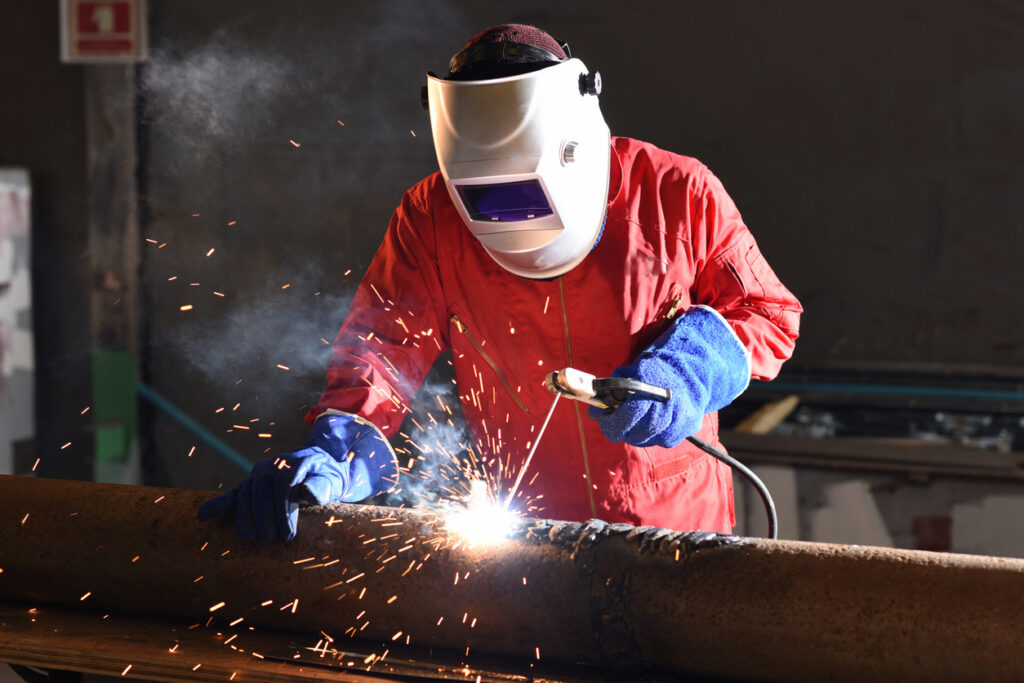
- Welding fume
- Wood dust
- Asbestos fibres
- Grain and other process dusts
Visible dust is a warning sign, but the absence of a visible cloud does not prove that exposure is low.
Fine particles can remain airborne and enter a worker’s breathing zone even when the workplace does not look particularly dusty.
Chemicals, vapours and skin exposure
Industrial and institutional workplaces can use solvents, cleaning products, adhesives, coatings, isocyanates and numerous process chemicals.
Exposure can occur through inhalation, skin contact or both.
This is one reason chemical assessment needs to go beyond asking whether workers wear gloves.
You need to understand the substance, how it is handled, how frequently contact occurs, the potential route of exposure and whether existing controls match the risk.
Noise and vibration
Noise is one of those hazards workplaces can gradually become accustomed to.
If everyone raises their voice to communicate in a particular area, that should prompt questions. It does not replace a proper noise assessment.
Depending on the workplace, evaluation can include full-shift dosimetry, area sound-level surveys and review of hearing-protection requirements. CrossSafety’s occupational and industrial hygiene service includes both noise-survey work and hearing-conservation support.
Vibration can also require attention, including hand-arm vibration from powered tools and whole-body vibration associated with some equipment and vehicles.
Biological hazards
Healthcare, institutional, municipal, water, construction and other workplaces can face biological hazards.
These can include mould, Legionella, bloodborne pathogens and infectious agents.
The assessment approach depends heavily on the situation. A concern involving suspected mould in a building is different from exposure to biological material in healthcare or laboratory work.
The important first step is defining the hazard and the pathway through which workers could be exposed.
Heat, cold and other physical stressors
Not every hygiene hazard is something workers breathe.
Heat stress, cold stress, radiation and lighting can all affect worker health and performance.
These issues become particularly important where environmental conditions, protective clothing, physical workload and work duration combine.
A worker doing physically demanding work while wearing heavy protective equipment, for example, can face a very different heat burden than someone standing in the same ambient temperature performing light work.
Construction-specific exposure
Construction deserves special attention because several significant health hazards can exist at the same time.
A renovation project can involve silica from concrete work, asbestos-containing materials, lead paint, welding fumes, diesel exhaust and chemical products used by several trades.
CrossSafety specifically identifies crystalline silica, lead, asbestos, diesel exhaust and isocyanates among the construction-related hazards covered through its hygiene services.
The challenge is coordination.
An employer can control the hazard created by its own crew and still have workers exposed to contaminants generated by another trade nearby.
That makes planning, communication and reassessment especially important as site conditions change.
08. From Measurement to Effective Exposure Controls
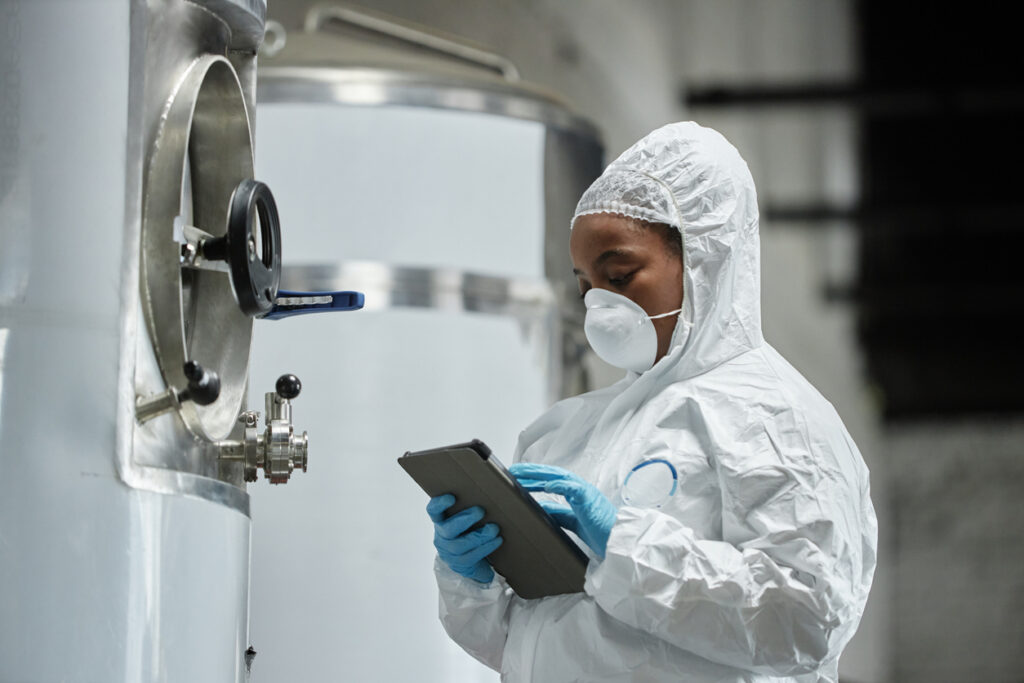
Testing is not the finish line.
If monitoring identifies an exposure concern, the next question is what you can change.
A useful way to think about controls is to start as close to the hazard as possible.
- Can the hazardous material be removed?
- Can a safer material or process replace it?
- Can the source be enclosed?
- Can local exhaust ventilation capture the contaminant before it enters the worker’s breathing zone?
- Can the worker be separated from the process?
- Can the work method, duration or scheduling be changed?
- Does respiratory or other protective equipment remain necessary after those measures are considered?
This matters because PPE places much of the burden on the individual worker.
Respiratory protection, for example, depends on appropriate hazard characterization, respirator selection, fit, use, maintenance and worker training. The current CrossSafety service scope includes hazard characterization, respirator selection, fit-test coordination and written respiratory-program development aligned with CSA Z94.4.
Ventilation provides another good example.
A local exhaust ventilation system can be a highly useful engineering control when it captures a contaminant close to where it is generated.
But simply having a hood or exhaust duct does not prove that the system performs as intended.
Changes in ductwork, filters, equipment, production rates, hood position or maintenance can affect performance. An assessment can determine whether the system is helping control the exposure it was designed to address.
That leads to one of the most important ideas in workplace exposure management:
Controls should be verified, not assumed.
09. Building an Occupational Hygiene Program
One assessment can answer an immediate question.
A program helps make sure the next question gets recognized sooner.
For organizations with recurring health hazards, an occupational hygiene program can bring several separate activities into one consistent process.
It can define how the organization:
- Identifies potential exposures
- Decides when monitoring is needed
- Establishes baseline data
- Records and communicates results
- Selects and maintains controls
- Manages respiratory protection and other PPE
- Reviews ventilation
- Addresses housekeeping and biological-safety requirements
- Responds to worker health concerns
- Reassesses exposure after operational changes
- Maintains records needed for compliance and due diligence
The service scope we reviewed includes development and revision of written programs covering exposure monitoring, PPE, ventilation, housekeeping, biological safety and health-surveillance requirements.
The program does not need to make every task complicated.
Its purpose is the opposite.
It creates a repeatable way to recognize when expert assessment is needed instead of rediscovering the same problem each time.
For example, a manufacturing organization can build exposure review into management of change. Before a new chemical or production process goes live, someone asks whether it introduces a new inhalation, skin, noise or other health hazard.
A construction employer can build the same thinking into project planning. Before crews begin work that will disturb concrete, coatings or older building materials, the team identifies likely exposures and plans controls.
Institutional and public-sector employers can use a similar process when introducing new disinfectants, renovating occupied facilities, responding to indoor environmental concerns or managing biological hazards.
- A strong program also clarifies ownership.
- Operations understands the process.
- Workers understand the task.
- Supervisors understand what to watch for.
- HSE teams understand the compliance requirements.
- Qualified specialists provide the technical assessment when the situation calls for it
That is much more dependable than waiting until someone asks, “Has anybody ever tested this?”
Quick FAQ
What is occupational hygiene?
It is the process of anticipating, recognizing, evaluating and controlling workplace health hazards such as chemicals, dust, noise, biological agents and physical stressors. The goal is to understand worker exposure and reduce it before it contributes to occupational illness.
When should workplace exposure monitoring be done?
Monitoring can be appropriate when a hazardous substance or process is introduced, workers report concerns, exposure levels are unknown, regulations require measurement, controls need to be verified or operations change in a way that could affect exposure.
What is the difference between personal and area air sampling?
Personal sampling measures contaminants near an individual worker’s breathing zone during work. Area sampling measures conditions at a particular location. Each serves a different purpose, and both can form part of an exposure assessment.
Does having an SDS mean an exposure assessment is not required?
No. An SDS provides important hazard and handling information about a product, but it does not measure the exposure a worker receives during a specific task or under actual workplace conditions.
What happens if exposure monitoring finds a problem?
The next step is to determine appropriate controls. Depending on the hazard, that can include changing the material or process, improving ventilation or isolation, modifying work practices, using suitable PPE and conducting follow-up monitoring to confirm that controls are effective.
10. Next Steps
Workplace health hazards are easier to manage when you identify them before they become occupational illnesses, compliance problems or complicated claims.
Start with the work that raises the most questions. Look at where employees encounter dust, fumes, chemicals, noise, biological agents or other physical stressors. Review what you already know, identify where exposure data is missing and determine whether existing controls have been verified.
To understand the types of assessment, monitoring and program support available, find out more about our occupational and industrial hygiene services.
If you have a specific exposure concern, a new process or simply do not know whether your current controls are enough, talk to an expert about the next practical step.