

Occupational health and safety becomes practical when you treat it like a simple operating system for risky work: spot hazards early, plan the work, train for real competency, put controls in place, check that they’re used, and improve based on what you find. This keeps you compliant, reduces incidents, and helps work stay on schedule.
Who This Guide is For & What’s Included
This page is built for the people who have to make safety decisions that hold up in the real world: HSE managers, operations leaders, HR, project managers, supervisors, who help evaluate training and safety partners across Canada.
The hard part of making health and safety occupational health work is day-to-day, when schedules are tight, crews change, and conditions shift.
We’ll discuss what due diligence looks like in practical terms, how to move from “training attended” to on-the-job competency, and how to plan higher-risk work so it’s controlled and repeatable. We’ll keep it plain and focused on what you can actually use.
This is general information; requirements vary by province/industry.
Table of Contents

1. What Does “Occupational Health and Safety” Mean in Practice?
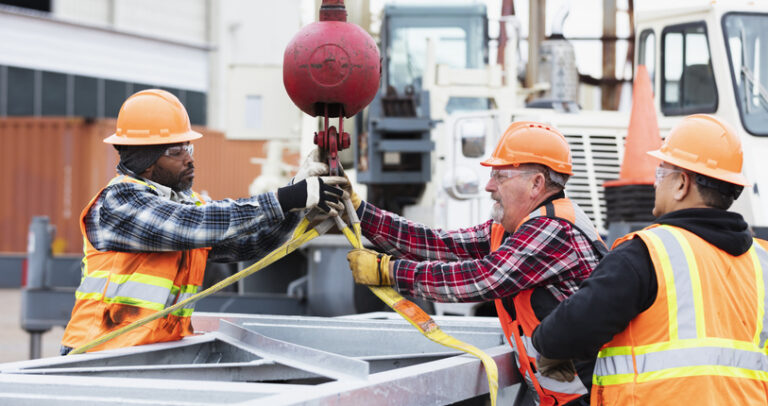

Let’s define a few terms the way people use them at work.
Health and safety usually covers preventing injuries and preventing harm from exposure to workplace hazards.
Occupational health is the “health” side—things like noise, dust, fumes, ergonomics, heat/cold stress, and fatigue. Occupational health and safety (often shortened to OHS) is the system you use to manage both: the roles, plans, training, controls, and checks that keep risks under control.
In practice, this isn’t one binder on a shelf. It’s what shows up in the field every day, like:
- A clear way to identify hazards before work starts
- Planning that matches the job you’re actually doing
- Training that builds skills and confirms people can apply them
- Controls that are in place, used properly, and maintained
- Documentation that supports inspections and helps you follow through on actions
If you’re comparing vendors, here’s a practical test: a strong workplace health and safety partner should be able to explain how your system runs day to day—not just what it looks like on paper.
2. Why Do Dangerous Jobs Need a Simple Safety System?

Dangerous work isn’t only about the obvious hazards. Equipment, heights, electrical and moving vehicles matter—but many problems build slowly through drift: a gradual slide from the planned way of working to the rushed way of working.
That drift shows up when:
- Crews change, but orientation doesn’t keep up
- The scope changes, but the plan doesn’t
- Production pressure increases, but controls don’t
- Supervisors are accountable, but not supported
- Safety paperwork exists, but nobody uses it
Requirements also differ by industry and geography (by province/territory, and by federal rules for federally regulated workplaces). Instead of trying to memorize everything, the smart move is to build an occupational health and safety system that can flex while still meeting core duties like training, supervision, hazard control, reporting, and documentation.
And “dangerous jobs” doesn’t only mean jobsites. Manufacturing, industrial maintenance, municipal operations, education, healthcare maintenance, and utilities all include higher-risk tasks. The setting changes. The need for a clear system doesn’t.
A practical occupational health and safety approach reduces incidents, reduces downtime, supports compliance, and helps work stay on schedule.
For an authoritative reference point when you’re checking requirements, use a regulator or standards body for your jurisdiction, such as the Canadian Centre for Occupational Health and Safety (CCOHS).
3. How Do You Build a Practical Occupational Health and Safety Framework?
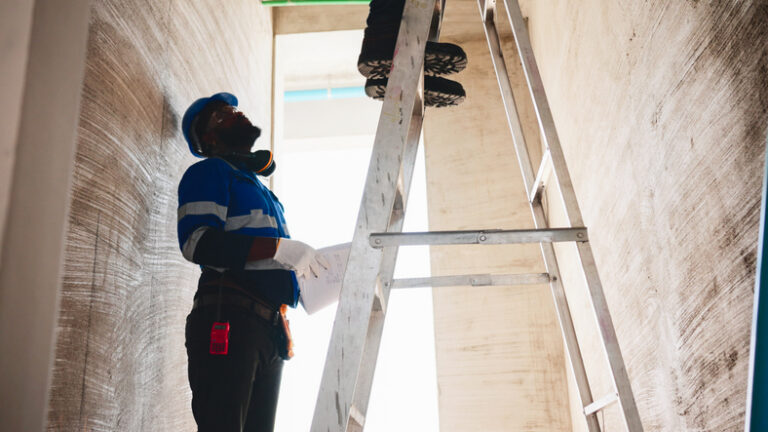
This is the backbone. It’s simple on purpose:
ASSESS > PLAN > TRAIN > IMPLEMENT > VERIFY > IMPROVE
You can apply this process to a whole organization, a single site, or one higher-risk task. The goal is consistency: fewer surprises, clearer roles, and controls that don’t depend on luck or memory.
Assess: What could hurt people or stop the job?
Assessment starts with hazard identification, but it should end with clarity.
Hazard (definition): anything with the potential to cause harm.
Risk (definition): how likely the harm is, and how severe it could be.
In dangerous work, hazards come in a few common buckets:
- Safety hazards: falls, mobile equipment, pinch points, struck-by, confined spaces, electrical energy
- Health hazards: silica, welding fumes, solvents, noise, vibration, heat, poor ergonomics
- Work organization hazards: fatigue, rushed work, unclear roles, poor handoffs
A practical assessment uses multiple inputs: worker observations, incident trends (including near misses), inspection findings, and changes in scope. If you only assess once a year, you’re basically driving by looking in the rearview mirror.
What good looks like:
- A repeatable hazard ID process (site-level and task-level)
- Clear ownership (who updates it, and when)
- A way to capture early warning signs (repeat issues, recurring close calls, common shortcuts)
Plan: What are we doing, who’s doing it, and what controls are required?
Planning is the bridge between “we know the hazards” and “we’re controlling them.” If the plan ignores real-world conditions, crews will improvise, and risk goes up.
A practical plan answers:
- What is the task, step by step?
- Who is involved (including contractors/subs)?
- What equipment and materials are used?
- What could go wrong at each step?
- What controls must be in place before starting?
Controls (definition): measures that reduce risk. Often grouped as elimination, substitution, engineering controls, administrative controls, and PPE.
It also helps to define “pause points” for the job—clear conditions where the crew stops and re-checks the plan (weather changes, access changes, equipment changes, new trade in the area, etc.).
Train: Can people do the work safely, or do they just attend a course?
Many workplaces mistakenly treat training like a checkbox: “They sat through the training, so we’re covered.” Attendance matters for records, but it doesn’t guarantee a worker can apply the skills safely on the job.
Competency (definition): having the knowledge, skill, and judgement to perform a task safely and consistently.
A practical training approach includes:
- Role-based training (worker, supervisor, contractor, visitor)
- Site/task-specific orientation (what’s different here?)
- Practice and demonstration (not just slides)
- Refreshers tied to trigger events (new equipment, new process, incident trends, observed skill gaps)
If your work includes exposures (dust, noise, chemicals), occupational health training matters too—people need to understand the hazard, the controls, and how to report concerns early.
Implement: Are controls actually in place and usable?
Implementation is the “make it real” phase. Controls that exist only on paper don’t protect anyone.
Make implementation practical by:
- Assigning control owners (who sets it up, who checks it, who maintains it)
- Making controls easy to use (right tools, right PPE, clear signage)
- Matching controls to field reality (weather, access, crews, shift patterns)
- Coordinating contractors so everyone is working from the same plan
If your controls rely on perfect behaviour under pressure, they’re going to fail when things get busy. Good controls are designed for the real world.
Verify: How do we know it’s working?
Verification is how you confirm controls are in place and actually effective—not just planned.
Verification (definition): checking whether controls are in place and effective.
Practical verification includes:
- Field observations focused on critical risks (not minor preferences)
- Inspections that lead to fixes, not just findings
- A simple way to record actions and close them out
- A way to confirm training effectiveness (can the person perform the task safely?)
Verification also supports due diligence. If something goes wrong, you need to show you had a process and you used it.
Improve: What changed, and what did we learn?
Improvement is where mature occupational health and safety programs separate themselves from “paper programs.”
Improvement means:
- Updating hazard assessments when conditions change
- Learning from near misses and small failures
- Fixing repeat findings with system changes (not reminders)
- Refreshing training based on real gaps
- Reviewing leading indicators (inspections, observations, close-out times)
If your system doesn’t change over time, it’s not a system—it’s a snapshot.
4. What does due diligence look like day to day?
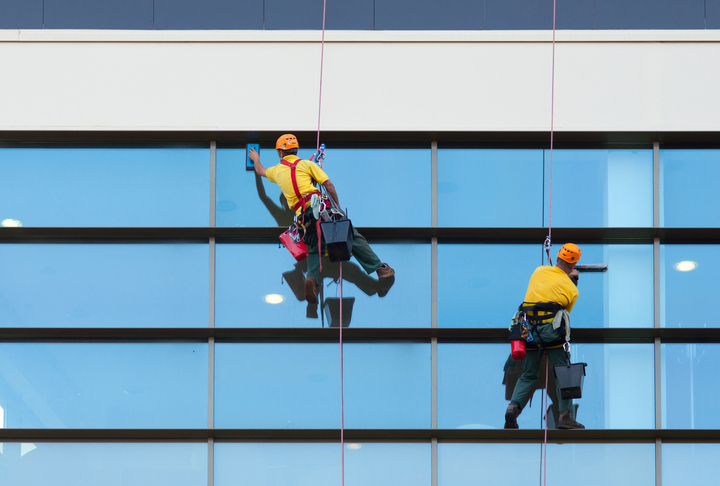
Due diligence is one of those terms everyone uses, but not everyone can explain in plain language.
Due diligence (definition): taking reasonable steps to prevent harm and meet your legal duties.
In the real world, due diligence is less about having perfect paperwork and more about proving you had a working process and followed it.
Here’s what “reasonable steps” often look like on a normal week:
- Supervisors complete focused pre-job reviews for high-risk tasks
- Hazards are recorded, and controls are assigned to a person (not “the team”)
- Inspections happen on a schedule that matches risk (more risk = more checks)
- Issues are fixed and closed out, not just listed
- Training records are up to date and tied to roles
- Contractors are oriented and coordinated, not just “told to be safe”
- Incidents and near misses are reviewed for root causes and system fixes
Documentation should support the work, not swallow it. If your forms take longer than the task, people will “creatively complete” them. (That’s a polite way of saying they’ll do it later – which often becomes never – or cut corners.)
A practical documentation set is:
- Short
- Clear
- Easy to find (where crews and supervisors actually look: mobile, shared drive, binder on site, etc.)
- Easy to audit
- Connected to actions (who does what by when)
For vendor evaluation, ask this: “Show me how you help a supervisor prove due diligence without burying them.”
5. How Do You Make Training Competency Stick?
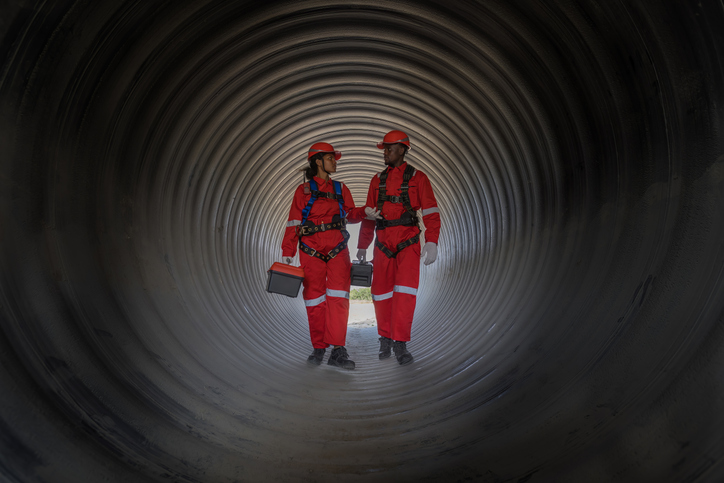
Training is one of the biggest investments organizations make in workplace health and safety—and one of the easiest places to lose value if it doesn’t transfer to the job.
Start by separating three ideas:
- Awareness: I’ve heard of the hazard.
- Understanding: I know how the hazard can affect me and what controls exist.
- Competency: I can do the task safely, under normal conditions, without being coached.
If you need proof of competency, build it into the training experience:
- Short knowledge checks (simple, not trick questions)
- Hands-on demonstrations (show me, don’t tell me)
- Job-relevant scenarios (your equipment, your workflow)
- Supervisor sign-off for task readiness (not a rubber stamp)
Training also fades over time. That’s normal. Short refreshers—toolbox talks, pre-shift huddles, safety moments, quick skill demos—work well when they’re tied to real tasks and real risks. (This applies just as well in a plant, a municipal yard (What’s a municipal yard?), or a jobsite.)
For organizations with multiple sites, consistency matters. Use shared expectations for what “competent” means and then adapt examples and hazards to each location. That keeps the program aligned without becoming complicated.
6. How Do Constructors, Contractors, and Supervisors Keep Jobsites Aligned?
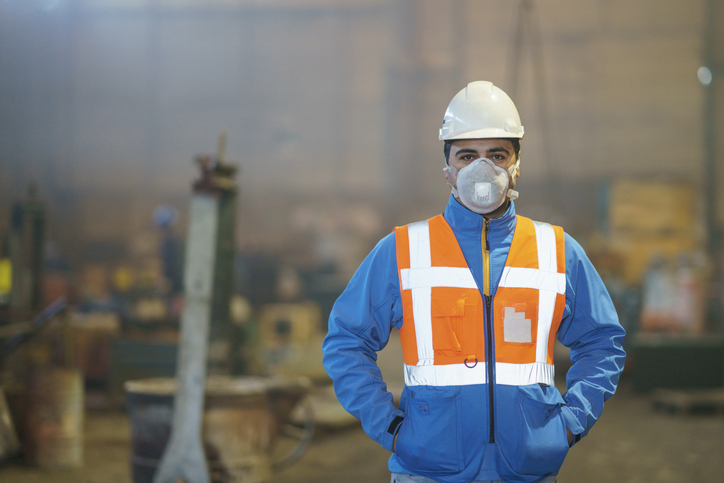
On multi-employer work, gaps often happen at the handoffs: who controls the hazard, who communicates changes, and who confirms controls are in place. That’s just as true on construction jobsites, as it is in manufacturing shutdowns, industrial maintenance work, and municipal work where multiple crews share the same space.
On jobsites with constructors, contractors, supervisors, and subs, the biggest risk is misalignment: one group assumes a hazard is controlled, while another group assumes someone else owns it.
Practical alignment comes down to a few essentials:
- Clear roles (who controls what, who has authority to stop work)
- Shared rules for critical risks (traffic control, energy isolation, work at heights, permits)
- A consistent orientation process for every crew and new worker
- Field coordination that matches changing conditions
- A clear way to communicate changes (new hazard, new sequence, new restriction)
Supervisors carry a lot here. They need tools that match the work: a usable pre-job process, quick access to procedures, and backup when something changes quickly.
If you’re in leadership, one of the most useful questions you can ask is: “What do our supervisors need to run this safely today?” If the answer is “more paperwork,” the system probably needs a redesign.
7. How Do You Plan High-Risk Work Without Slowing the Job?

Planning for high-risk work should help with fewer last-minute surprises, fewer stoppages, fewer conflicting assumptions.
High-risk work often includes:
- Energy isolation (lockout/tagout)
- Work at heights and fall protection systems
- Confined spaces
- Hot work
- Mobile equipment interactions
- Hazardous materials and exposure controls
- Critical lifts and complex rigging
- Permits and authorizations (where required)
The planning tool can vary by industry: JHA/JSA, safe work plan, permit, or a site-specific method statement. The name matters less than the quality.
A practical high-risk plan includes:
- The steps of the job
- The critical hazards at each step
- The controls required before starting
- The right equipment and PPE
- Competency requirements (who is allowed to do this work)
- Communication and emergency considerations (where relevant)
- A change review (what conditions require the plan to be updated)
Plans should be as concise as possible—but as detailed as necessary. Some tasks fit on a page. Others (complex lifts, major shutdowns, confined space programs) legitimately require more detail. The point is that the plan should match the risk and the work.
This is also where occupational health often gets missed. If the task creates dust, fumes, noise, or awkward postures, build controls in from the start. It’s usually easier and less disruptive than trying to fix exposure issues after the work is underway.
8. What Should You Do This Week to Improve Workplace Health and Safety?

Here are 10 actions you can take this week without launching a major project. Pick the ones that match your environment and current program maturity.
- Identify your top 5 critical risks (serious harm or major downtime potential)
- Confirm who owns each risk (role + name)
- Review one higher-risk task end-to-end and tighten controls where needed
- Check contractor orientation and coordination for gaps
- Audit training records for one work group and confirm competency on one task
- Walk one work area and look for drift (controls missing, bypassed, or worn out)
- Close out one repeat inspection issue with a system fix (not just a reminder)
- Simplify one form that people avoid using
- Add one leading indicator to your weekly rhythm (e.g., action close-out time)
- Capture one worker improvement suggestion and follow through quickly
Consistent follow-through is what turns a safety program into normal operations.
Quick FAQ
What’s the difference between occupational health and occupational safety?
Occupational health focuses on exposures and conditions that harm health over time (noise, dust, chemicals, ergonomics). Occupational safety focuses on immediate incident risks (falls, struck-by, caught-in). Strong occupational health and safety programs manage both together.
Do we need different safety programs for each province?
Legal requirements vary, but your core system can be consistent. Use one common framework and adjust site rules, training, and documentation to match provincial and industry requirements.
What counts as “good documentation” for due diligence?
Documentation should show hazards were identified, controls were assigned and used, issues were fixed, and training matched roles. Short, clear, and connected to action beats bulky binders.
How often should we refresh safety training?
Refresh training when something changes or a gap shows up: new equipment, a new process, new hazards, a near miss/incident trend, or supervisors see skills slipping. For higher-risk work, refresh more often—especially if crews change, contractors rotate in, or the task isn’t done regularly.
How do we reduce worksite incidents without slowing production?
Plan high-risk work clearly, remove friction (right tools, right controls), and verify critical risks in the field. When controls are practical, work usually speeds up because there are fewer surprises.
Make your safety system easier to run, not harder to maintain
If you’re trying to make your program more consistent, more inspection-ready, and easier for supervisors to run, start by strengthening the training and learning pieces that support your day-to-day controls. Explore our workplace safety training and learning programs here.
If you want to talk through your risks, your current process, and what a practical improvement plan could look like, use this talk to an HSE expert link.
Done right, occupational health and safety stops feeling like “extra work” and starts working like a system your team can actually use.
Additional Reading
- How to Keep a Safety Focus When Schedules Are Tight and Crews Change
- What Does It Mean to Work in Safety – and How Do You Prove It?
- Health and Safety Risks: What to Watch for and How to Prioritize
- How Supervisors Ensure Safety on a Jobsite Without Slowing Work Down
- What Are Health Safety Services and Which Ones Do You Actually Need?
- Workplace Safety: What it Really Means and What a Practical System Includes